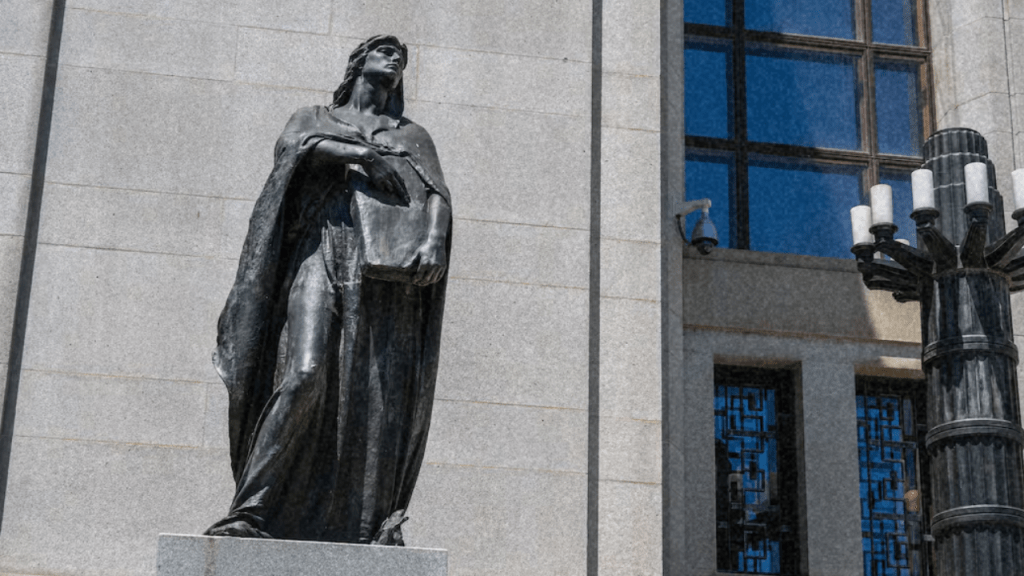
Canada’s top court refused to hear the Wolastoqey appeal, leaving in place the finding that Aboriginal title stops at the edge of private property.
The New Brunswick Court of Appeal, in its December 2025 decision in J.D. Irving, Limited et al. v. Wolastoqey Nation, drew a line that most of Canadian Aboriginal law has tried to avoid drawing clearly. The Wolastoqey Nation could not obtain a declaration of Aboriginal title over privately held land. It could pursue a finding of Aboriginal title over that same land, for the purpose of a damages claim against the Crown. The court framed the limit in terms of procedural fairness — private landholders had been removed from the lawsuit, and courts do not issue binding orders about property against parties who weren’t present.
But the practical architecture of the ruling went further than procedure. It confirmed that whatever Aboriginal title means in theory, it cannot translate into a present land right over territory that settlers now hold in fee simple. One of the appeal judges captured the logic directly. Granting exclusive possession, occupation, and use of the land to the Wolastoqey nations, the judge wrote, “would sound the death knell of reconciliation with the interests of non-Aboriginal Canadians.” On May 28, 2026, the Supreme Court of Canada refused leave to appeal. That framing now stands as law in New Brunswick.
One of the appeal judges captured the logic of the ruling directly. Granting exclusive possession, occupation, and use of the land to the Wolastoqey nations, the judge wrote, “would sound the death knell of reconciliation with the interests of non-Aboriginal Canadians.” On May 28, 2026, the Supreme Court of Canada refused to hear the Wolastoqey’s application for leave to appeal. That framing now stands as law in New Brunswick.
What the finding-versus-declaration framework does
The court’s distinction between a finding of Aboriginal title and a declaration of Aboriginal title is not a minor procedural distinction. It is the architecture through which the land right gets converted into a financial claim. A declaration recognizes a present and enforceable title interest in the land. A finding acknowledges that Aboriginal title existed — or was infringed — and redirects the remedy. The Wolastoqey can prove their land was taken. The land itself stays beyond reach. The Crown becomes liable for compensation. The private property system does not.
That translation from land into damages has a name in Indigenous legal scholarship: recognition without return. It is also the dominant pattern of Canadian Aboriginal law since Delgamuukw. In its 1997 decision, the Supreme Court of Canada clarified that Aboriginal title is not merely a right to hunt, fish, or gather on land. It is a right to the land itself — a sui generis proprietary interest grounded in Indigenous occupation before Crown sovereignty. The court ordered a new trial. That trial never happened. Delgamuukw produced landmark doctrine and no land.
The Cowichan framework and what it exposed
In August 2025, four months before the New Brunswick decision, the BC Supreme Court took a different path. In Cowichan Tribes v. Canada (Attorney General), 2025 BCSC 1490, Justice Barbara Young declared Aboriginal title over Tl’uqtinus — roughly 325 hectares of what is now Richmond, including Crown, City of Richmond, and about 125 private residents’ land. It was the first decision in Canadian history to declare Aboriginal title over an area including private fee-simple interests. Justice Young found Aboriginal title a “senior interest” relative to fee-simple title, and that BC’s Land Title Act provisions on “indefeasible” title do not apply against Aboriginal title.
The Cowichan Tribes have stated they are not seeking to displace private homeowners. But the question the decision raised is not about displacement. It is about whether the Crown-created property interest holds priority over a prior constitutional land right. BC’s Attorney General Niki Sharma said the Wolastoqey SCC refusal “gives us a clear path to an appeal” in the Cowichan case. The Crown-Indigenous Relations Department confirmed Canada would “make all legally viable arguments to protect private property” in the Cowichan proceedings. Federal and provincial governments and the City of Richmond are all appellants. Montrose Properties is separately seeking to reopen the trial, saying it was unfairly excluded.
The circular logic of the property shield
The constitutional structure of the private-land argument is worth setting out plainly. Aboriginal title is not a Crown grant. It is a pre-existing land right grounded in Indigenous nations’ occupation and governance of their territories before Crown sovereignty. Section 35 of the Constitution Act, 1982 recognizes and affirms existing Aboriginal and treaty rights. Fee-simple private property, by contrast, is not constitutionally entrenched in that sense. It derives from Crown grants and provincial land-title legislation.
The Crown asserted sovereignty over Indigenous territories. It treated those territories as Crown land. It granted that land into private fee-simple ownership. Generations later, courts are asked whether Aboriginal title can be declared over land now held privately. The New Brunswick framework answers: not by declaration, because the private parties weren’t present in the case to defend their interest. The practical result is that the Crown’s conversion of Indigenous territory into private property becomes the reason the Indigenous title cannot produce its full remedy. A constitutional right is contained by the legal consequences of the dispossession that preceded it.
Section 35 and the hierarchy of remedies
The Tsilhqot’in Nation decision of 2014 established that once Aboriginal title is proven, the Crown must either obtain consent from the title-holding nation or justify any incursion under section 35’s framework for limiting Indigenous rights. That decision was significant. But it concerned Crown land, not privately held land. It left the harder case open: what happens when the territory claimed under Aboriginal title has already been granted out of the Crown’s hands?
The divergence between Cowichan and Wolastoqey is exactly that unresolved question in legal form. Cowichan holds that Aboriginal title and fee-simple title can co-exist — that neither is absolute and that the courts can recognize both. Wolastoqey holds that where private parties are involved, the procedural requirements of litigation constrain the available remedies. Both cases will now proceed through appeals without settled national law. The Wolastoqey Nation in its leave application asked the Supreme Court to answer a single question: can Aboriginal title exist over privately held lands? The SCC declined to answer.
J.D. Irving and the political economy of private title
The Wolastoqey title claim covers the western half of New Brunswick — lands, airspace, foreshore, lakes and rivers — including large tracts of privately held industrial forest. The lead private defendant in the Court of Appeal proceedings was J.D. Irving, Limited, one of Canada’s largest privately held conglomerates, with major forestry operations in New Brunswick. The “private property” interest at stake in the Wolastoqey case is not primarily a family home. It is a corporate landholding built on the assumption that Crown grants of Indigenous territory were legally clean.
That assumption is precisely what Aboriginal title claims contest. The Wolastoqey Nation, through its six chiefs including Chief Patricia Bernard of Madawaska Maliseet First Nation, has been clear: “Our ancestors never surrendered our lands and waters.” The claim has proceeded through pretrial procedural motions. The underlying title trial, across nearly half the province, has not yet been heard. The New Brunswick Court of Appeal’s decision came on preliminary procedural grounds, setting the remedial parameters before the substantive evidence is heard.
What “reconciliation with non-Aboriginal Canadians” forecloses
The judge’s phrase is the most revealing part of the decision: Aboriginal title as declaration “would sound the death knell of reconciliation with the interests of non-Aboriginal Canadians.” Read carefully, this is an argument about who reconciliation is for. It frames the settler property interest as something reconciliation must protect. It places “non-Aboriginal Canadians” as the reference population against which the disruption of a land declaration must be weighed. Aboriginal title becomes something that must be managed within parameters acceptable to the property regime, rather than something that might reorganize the property regime from within.
The federal government’s response to the SCC refusal made the same framework explicit. A Crown-Indigenous Relations spokesperson confirmed Canada would “make all legally viable arguments to protect private property” in the Cowichan appeal. “At the same time, we remain committed to advancing reconciliation and working with Indigenous partners to address claims in a way that respects and upholds their rights and preserves the certainty and stability of private property.” Reconciliation, in this framing, operates inside the constraint that the settler property system must be preserved. The Haida Nation’s negotiated agreement recognizing Aboriginal title while preserving private ownership is sometimes cited as the model. Whether that model works where J.D. Irving sits at the table is a different question.
The longer the dispossession, the more settled the law
There is a particular perversity in the logic of private-land protection as a limit on Aboriginal title. The territories where the settler property system is most entrenched — where more land was sold, more private title registered, more corporate interest accumulated — are precisely where dispossession was most complete. The argument that title cannot be declared is most powerful exactly where the Crown moved fastest and farthest. Where Indigenous nations were confined most thoroughly to reserves is where the remedy is least available. Aboriginal title operates most strongly where settler activity was historically weakest; it is weakest where the land matters most to the material structure of the settler economy.
This is not a neutral outcome. It rewards the pace and completeness of dispossession. It means Aboriginal title operates most powerfully where settler activity was historically weakest — remote Crown land, undeveloped territory, areas of limited economic extraction. It means Aboriginal title is weakest where it matters most to the material structure of the settler economy. If section 35 means anything, it cannot mean that Aboriginal title survives only where colonialism left it room.


Leave a comment